Checklist
How to choose a podcast studio: a nine-point checklist
The nine things to check before you book a podcast studio, from how the room sounds to the files you leave with, plus the questions to ask and the answers that should worry you.
By the BookMyPodcastStudio team · Updated · 7 min read
To choose a podcast studio, check three things before anything else: how the room sounds, whether every speaker gets their own microphone on its own track, and exactly which files you will leave with. Everything else, from the cameras to the parking, matters only once those three are right. Two studios can look identical in photos and sound nothing alike, and the table, the microphones and the neon sign are the easy part.
1. How the room sounds
Two different things get called “soundproof”, and you want to know which one a studio means.
- Acoustic treatment is the panels and foam inside the room. It stops your voice bouncing off the walls, which is what makes a recording sound echoey and amateur. This matters most.
- Soundproofing is construction that keeps outside noise out: traffic, the lift, the office next door. It matters if the studio is on a busy road.
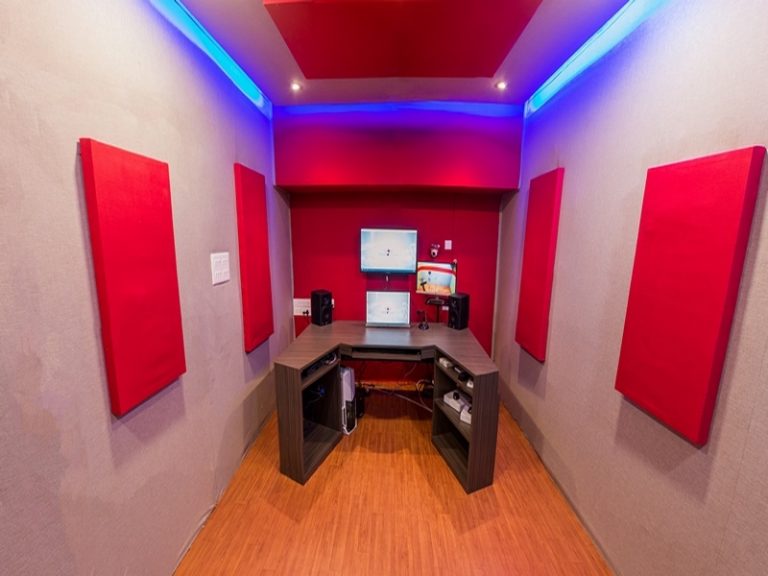
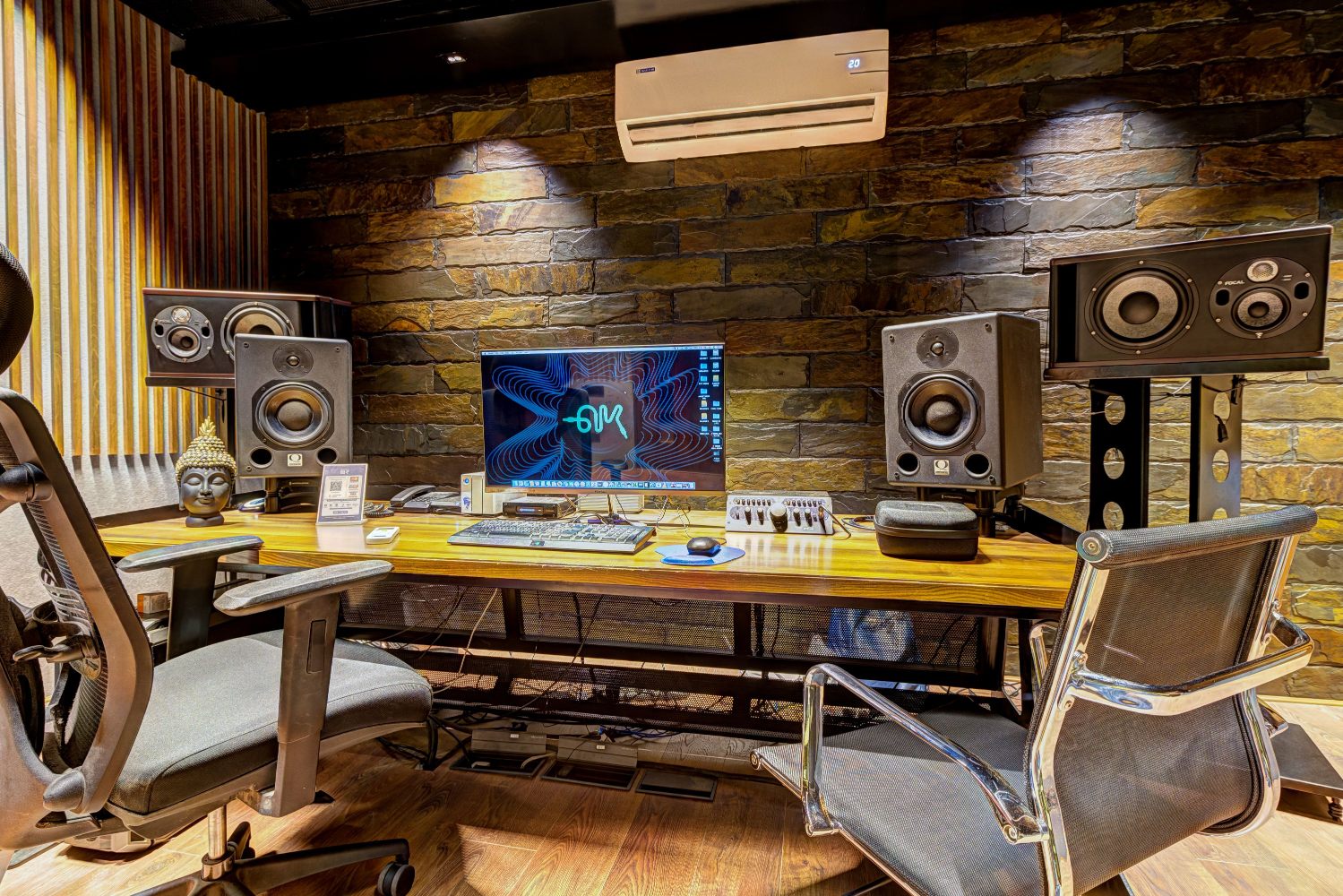
When this guide was written, in October 2026, 141 listings on this site described their rooms. Of those, 54 mentioned acoustic treatment and 45 mentioned soundproofing. Do not take either on trust. The test is simple: ask for an unedited clip recorded in the room and listen on headphones. If you can hear the room, your audience will too.
2. A microphone for every person
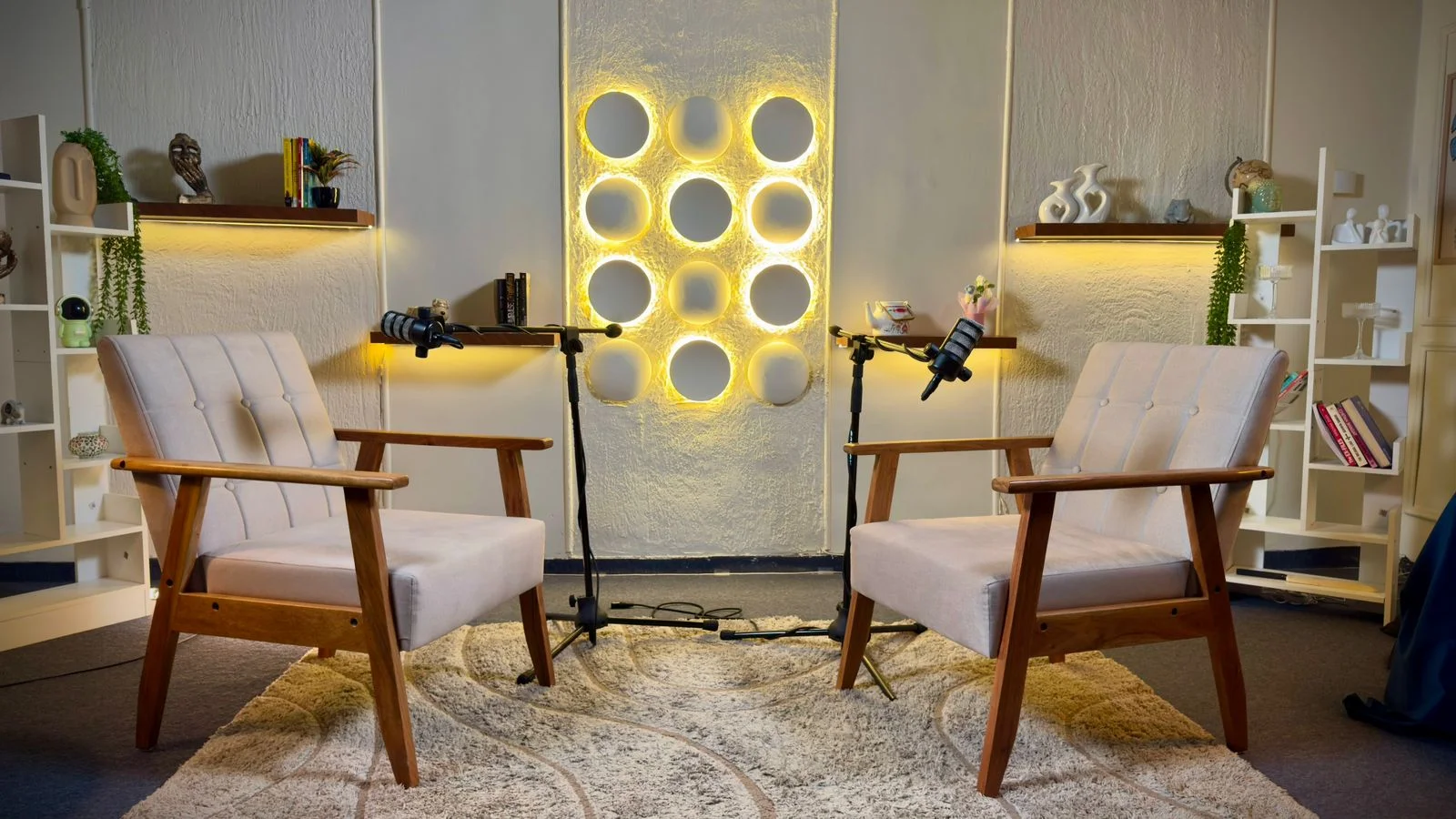
Each speaker needs their own microphone, close to their mouth. Two people sharing one microphone, or a single microphone in the middle of the table, cannot be fixed afterwards.
The type matters less than people think, but it helps to know the two families. Dynamic microphones, such as the Shure SM7B and Rode PodMic that appear on listings here, pick up what is directly in front of them and little else, which is forgiving in an ordinary room. Condenser microphones, such as the Neumann and AKG models common in music studios, are more detailed and hear more of the room, so they suit a well-treated space.
3. Whether each voice is recorded separately
Ask one question: “Do we get a separate track for each microphone?” With separate tracks, an editor can turn down a guest who was too loud, or remove a cough, without touching the other voice. With everything mixed into one file, whatever was recorded is what you have.
4. Cameras and lighting, if you are filming
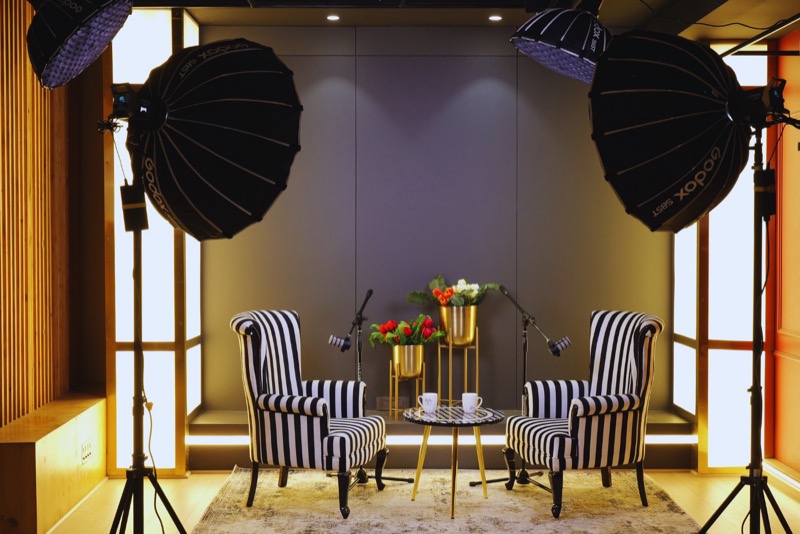
For a two-person conversation the standard is three angles: one wide shot and one on each speaker. Two cameras work. One camera gives the editor nothing to cut to, so every stumble stays in.
A three-camera podcast setup, from above
The two outer cameras each film the person opposite; the centre camera holds the wide shot the editor cuts back to.
Of the 141 listings that described their rooms, 59 mentioned cameras and 78 mentioned lighting, so do not assume either is included in the price. Ask to see a video shot in that room, not a showreel. Look at the faces: are they evenly lit, and is the background the one in the photos?
5. Who presses record
Some studios are self-service: you are shown the setup and left to it. Others include an operator who frames the shots, watches the sound levels and stops you if something goes wrong.
| Self-service | With an operator | |
|---|---|---|
| Who runs the recording | You | The studio’s engineer or camera operator |
| Cost | Lower | Higher; one of the main reasons two quotes differ |
| Risk | A silent microphone or soft focus goes unnoticed | Problems are caught while you can still retake |
| Best for | Experienced hosts, audio-only shows | First recordings, video, important guests |
For a first recording an operator is worth paying for. A dead microphone discovered afterwards costs far more than the difference in price.
6. What you leave with, and when
Bring a drive with plenty of space. Two hours of footage from three cameras is large, and a download link that expires in a week is not a backup.
7. Seats and space
Few listings state how many people a set seats, so ask. A set built for two becomes cramped and hard to light with four. If you plan a guest panel, or a host who stands, say so when you enquire.
8. Air conditioning, power backup and parking
- Air conditioning. Mentioned by 39 of the 141 listings. Ask whether it can stay on while recording. A noisy unit gets switched off, and a closed room in May is hard on guests.
- Power backup. Mentioned by 20. A power cut in the middle of a take can corrupt the recording.
- Parking and access. Mentioned by 18. It matters more to your guests than to you.
- A make-up or changing room. Mentioned by 30. Useful if you film several episodes with a change of clothes.
9. The booking terms
Four things to settle in writing: the minimum booking, the charge for running over, whether GST is included, and what happens if a guest cancels on the morning. The guide to podcast studio rental costs has published figures for each.
The podcast studio checklist in one table
Ask these on the phone, in this order. The answers sort studios quickly.
| Ask | A good answer | A warning sign |
|---|---|---|
| Can I hear an unedited clip from the room? | A file sent the same day | Only a polished showreel |
| How many microphones, and what kind? | One per speaker, named models | “We have a mic” |
| Is each microphone on its own track? | Yes, multitrack WAV | One mixed MP3 |
| How many cameras are included? | Two or three, with lighting | “Camera is extra”, with no price |
| Is there an operator? | Yes, or a clear self-service briefing | Nobody on site |
| What files do we get, and when? | Raw files on the day, edit in a stated number of days | “We will send it” |
| What is the price, with GST? | One figure, in writing | A range that depends |
| What if we overrun? | A per-hour or per-half-hour rate | “We will see” |
If you can, visit first
Ten minutes in the room tells you more than any listing. Clap once and listen for a ring. Sit at the table and check the chairs do not creak. Ask to hear the last thing recorded there. If a visit is not possible, book the shortest slot the studio offers as a test before you commit to a series.
Listings on this site show each studio’s equipment and amenities where the studio has described them. Start with the best-rated podcast studios in each city, browse all studios, or find podcast studios near you.
Frequently asked questions
What equipment should a podcast studio have?
At minimum: an acoustically treated room, one microphone per speaker, headphones, and a recorder or interface that saves each microphone to its own track. For video, add at least two cameras and proper lighting. Ask for the make and model of the microphones and cameras; a studio that knows its equipment will tell you.
What is the difference between acoustic treatment and soundproofing?
Acoustic treatment is the panels and foam inside a room that stop your voice echoing off the walls. Soundproofing is construction that keeps outside noise such as traffic from getting in. Treatment decides how your voice sounds; soundproofing decides what else is on the recording. A podcast needs treatment first.
How many cameras do I need for a video podcast?
Three for a two-person conversation: one wide shot and one on each speaker. Two cameras are workable. One camera gives the editor nothing to cut to, so every pause and stumble stays in the final video.
Should I book a studio with an operator or a self-service studio?
For a first recording, a video shoot or an important guest, book an operator: they notice a silent microphone or a camera out of focus while you can still retake. Self-service suits experienced hosts recording audio-only shows.
How can I check a studio's sound quality before booking?
Ask for an unedited audio clip recorded in the room and listen on headphones. If you can hear echo or outside noise, so will your audience. If you can visit, clap once in the room and listen for a ring.