Beginner’s guide
How to start a podcast in India: a step-by-step guide
Seven steps from an idea to a published show: choosing a topic and format, recording at home or in a studio, editing, free hosting on Spotify, and getting onto Apple Podcasts, YouTube and JioSaavn, with what each step costs.
By the BookMyPodcastStudio team · Updated · 10 min read
To start a podcast in India you need seven things: a topic you can sustain, a format, somewhere to record, an edit, a host that gives you an RSS feed, listings on the apps people use, and a launch. Publishing is free. Recording is the only step that has to cost money, and it need not cost much: published studio rates on this site start at ₹500 an hour. This guide takes the seven steps in order and says what each one costs.
Starting a podcast in seven steps
Each step links to its section below.
Step 1: Choose a topic and a listener
“Business” is not a topic. “How first-generation founders in tier-two cities raise their first round” is. The narrower the subject, the easier it is to be the obvious show for the people who care about it, and the easier every later decision becomes.
Three tests before you commit:
- The twenty-title test. Write twenty episode titles. If you run dry at eight, widen the topic. If they wander, narrow it.
- The one-listener test. Describe a single person who would listen to all twenty. Their age, their work, what they are trying to do.
- The language test. Record in the language that listener thinks in: Hindi, English, a mix of the two, Tamil, Marathi, Bengali. Then stay in it. A show that switches language loses half its audience each time.
Choose a name people can spell after hearing it once, and search Spotify and Apple Podcasts to check nobody already has it.
Step 2: Choose a format
| Format | What it needs | Suits |
|---|---|---|
| Solo | One microphone and a clear outline | Teachers, experts, commentary |
| Interview | A guest each episode and a way to record them | Curious hosts with a network |
| Co-hosted | Two people with chemistry and one schedule | Conversation, comedy, sport |
| Narrative | Research, scripting and heavy editing | Stories, history, true crime |
Then decide two things you will be held to. Length: as long as the material is good and no longer; twenty to forty minutes is a manageable place to start. Schedule: weekly or fortnightly, whichever you can keep for three months without a gap.
Finally, audio or video. Video opens YouTube and gives you clips for Instagram, and it adds a good deal of work: lighting, framing and a longer edit. If you are unsure, start with audio and add cameras once the show has a rhythm.
Step 3: Decide where to record, at home or in a studio
This is the only step that has to cost money, so it is worth getting right.
| At home | In a rented studio | |
|---|---|---|
| Upfront cost | A microphone and headphones, bought once | None |
| Cost per episode | Nothing | From ₹1,000 for audio; ₹5,000 to ₹9,500 with two cameras |
| Sound | As good as your quietest room | A treated room and proper microphones |
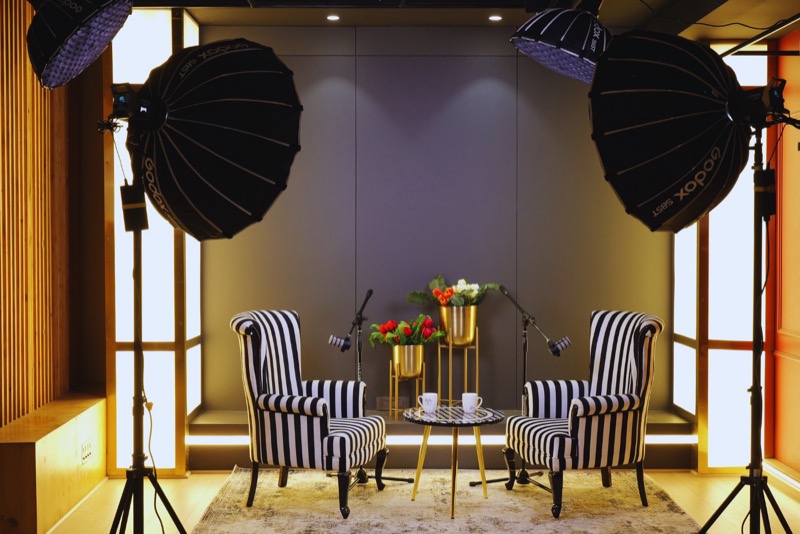
| Video | Hard to light and frame well | Cameras, lighting and a set already in place |
| Guests in person | Awkward | What studios are built for |
| Best for | Solo and remote-interview audio shows | Video podcasts and in-person interviews |
If you record at home, the room matters more than the microphone. Pick the smallest, softest room you have: curtains, a bed, a full wardrobe. Sit close to the microphone, a hand’s width away. Wear headphones. For a guest in another city, use a remote-recording service that records each person on their own device, not a video call, which compresses the sound.
If you rent a studio, you are paying for the room, the equipment and often someone to run it. Of the 441 studios listed on this site, 26 publish an hourly rate, from ₹500 to ₹8,000. On published rate cards an audio-only episode costs ₹1,000 to ₹3,000 for two hours, and a two-camera video episode ₹5,000 to ₹9,500, before GST. The guide to podcast studio rental costs has the figures city by city.
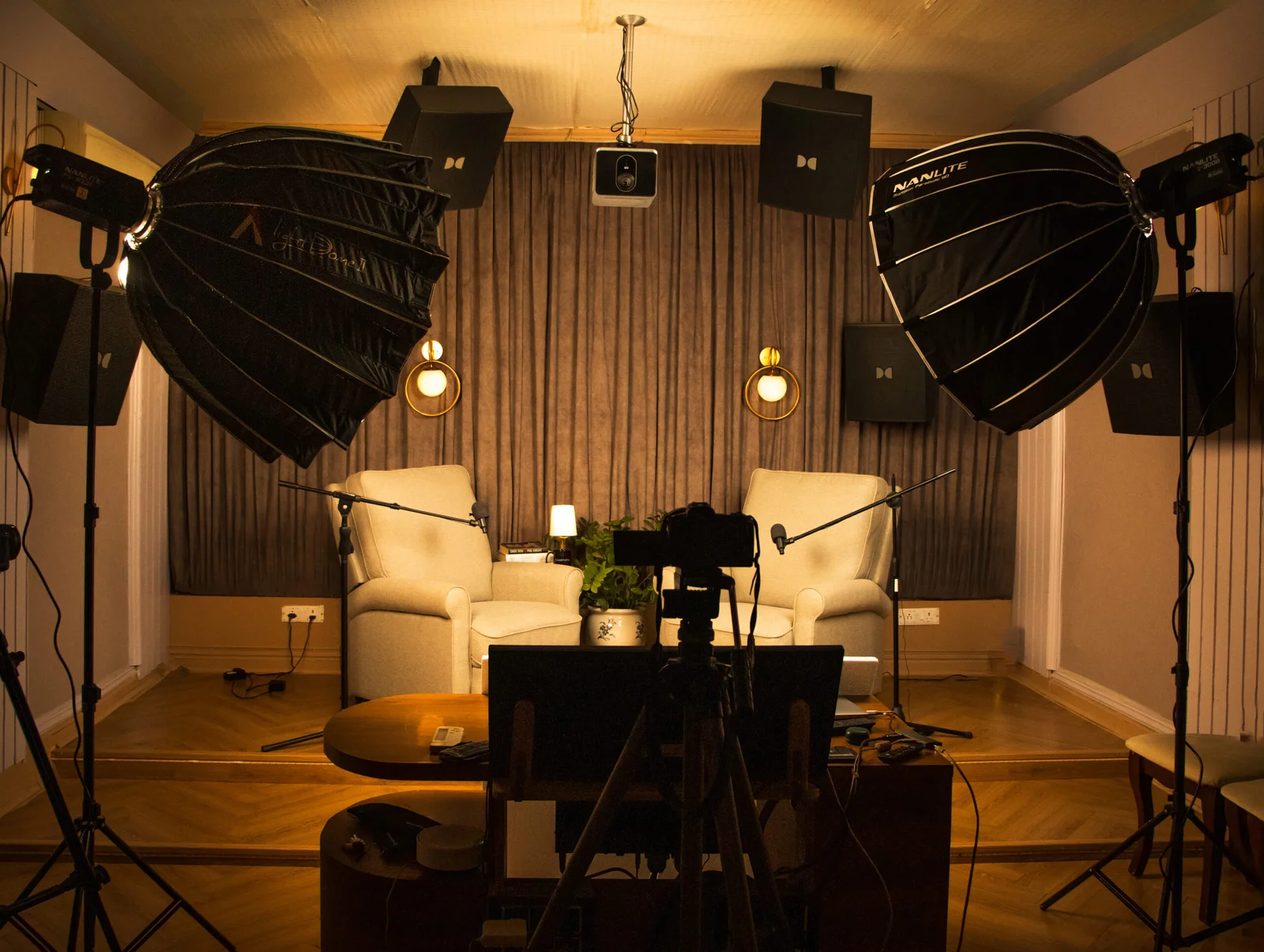
To find one, see the best-rated podcast studios in each city, or the studios nearest you. Not every room that calls itself a podcast studio is one; the guide to podcast studios versus recording studios explains which kind you need.
Step 4: Record your first episodes
Write an outline, not a script: the opening line, five or six points, the closing line. Record a thirty-second test and listen to it on headphones before every session. Expect the first episode to be the worst you ever make. That is the reason to record three before anyone hears one.
- If you stumble, stop, breathe and say the whole sentence again. It is easy to cut.
- Keep each speaker on their own microphone, and their own track if you can.
- Leave ten seconds of silence at the start; an editor uses it to remove hiss.
- Save the raw files in two places the same day.
Recording in a studio for the first time? The guide to your first podcast studio session walks through the two hours minute by minute.
Step 5: Edit
Editing is three jobs. Cut the false starts, the long pauses and anything that does not serve the listener. Level the voices so nobody has to reach for the volume. Top and tail with a short introduction and a sign-off.
You do not need paid software. Audacity is free and edits audio on any computer; GarageBand comes with a Mac; DaVinci Resolve has a free version that edits video. Export audio as an MP3. If you would rather not edit, many studios sell it as an add-on: one published package is ₹4,999 plus GST for an edited episode with four reels.
Step 6: Publish on Spotify, Apple Podcasts, YouTube and JioSaavn
A podcast is not uploaded to each app separately. You upload it once to a host, the host produces an RSS feed, and every app reads that feed. Publish a new episode on the host and it appears everywhere.
The simplest free host is Spotify for Creators (formerly Anchor). It charges nothing to host and lists your show on Spotify automatically. To set up:
- Create the show: its name, a two-sentence description, a category and a language.
- Add cover art. Make it square and 3000 by 3000 pixels, as a JPEG or PNG; Apple Podcasts accepts nothing smaller than 1400 by 1400. Check the title is readable at the size of a thumbnail.
- Upload your first episode with a title and a description, and publish.
- In the show’s settings, switch on the RSS feed and copy its address. You need it for every other app.
Then submit that feed once to each of the other apps:
| App | How to get listed | Good to know |
|---|---|---|
| Spotify | Automatic when you host on Spotify for Creators | Nothing more to do |
| Apple Podcasts | Submit your feed in Apple Podcasts Connect | Needs an Apple account; artwork must meet the size rule |
| Amazon Music | Submit your feed at Amazon Music for Podcasters | Also lists the show on Audible |
| JioSaavn | Submit your feed through JioSaavn YourCast | Reviewed before it goes live; allow about a week |
| YouTube | In YouTube Studio, create a podcast and add your episodes to it | Video episodes do best; an audio feed can be imported where that option is offered |
Each app verifies that the feed is yours, usually by emailing a code to the address on the feed. The steps change from time to time, so follow the app’s own instructions on the day.
Step 7: Launch, then keep going
Launch with three episodes and a short trailer. One episode gives a new listener nothing to continue with.
- Tell the people who already know you first, and ask them to follow the show rather than just play it. Followers get every new episode.
- Cut clips. A thirty-second moment from each episode, with captions, for Instagram and YouTube Shorts. This is where a video recording pays for itself.
- Make every guest a promoter. Send them a clip and the link on the day their episode is published.
- Publish on the same day each week. Consistency does more for a new show than any single good episode.
Judge the show after ten episodes, not one. Look at how many people follow it and how much of each episode they finish, not at the first day’s plays.
What does it cost to start a podcast in India?
You can publish for nothing. What you spend depends on where you record and who edits.
| Doing it yourself | Paying for it | |
|---|---|---|
| Hosting and distribution | Free on Spotify for Creators | Paid hosts exist; not needed to start |
| Recording | A microphone and headphones, bought once | ₹1,000 to ₹3,000 an audio episode in a studio; ₹5,000 to ₹9,500 with two cameras |
| Editing | Free software and your time | About ₹5,000 an episode with reels, on one published rate card |
| Cover art and music | Free design tools; royalty-free music | A designer and a commissioned theme, once |
So the minimum is the price of a microphone. A studio-recorded, professionally edited video episode comes to roughly ₹10,000 to ₹15,000 on published rates, before GST, and a monthly studio package brings that down if you publish every week.
A four-week plan to your first episode
From idea to launch in four weeks
A realistic pace alongside a job. Compress it if you have the time; do not skip a week.
- Week 1DecideTopic, listener and nameTwenty episode titlesFormat and schedule
- Week 2PrepareOutline three episodesBook a studio or set up a roomInvite your first guests
- Week 3Record and editRecord three episodesEdit and exportMake the cover art
- Week 4PublishSet up the host and feedSubmit to each appLaunch with all three
Mistakes to avoid
- Buying equipment first. Decide the show, then buy or rent what it needs.
- Launching with one episode. Launch with three.
- A two-minute introduction. Say what the episode is about in the first fifteen seconds.
- Ignoring the sound. Listeners forgive plain video. They do not forgive echo.
- No schedule. A show that appears when it appears does not build a habit.
- Film music. It gets episodes taken down.
Ready to record? Compare podcast studios across India, or run through the nine checks before you book one.
Frequently asked questions
Is it free to start a podcast in India?
Publishing is free: Spotify for Creators hosts your episodes at no charge and lists the show on Spotify, and you can submit the same feed to Apple Podcasts, Amazon Music and JioSaavn without paying. The costs are recording, which needs a microphone or a rented studio, and editing, if you do not do it yourself.
How much does it cost to start a podcast in India?
Nothing to publish. Recording at home costs a microphone and headphones, bought once. Recording in a studio costs from ₹500 an hour on the rates published on this site; an audio-only episode is typically ₹1,000 to ₹3,000 and a two-camera video episode ₹5,000 to ₹9,500, before GST. Professional editing adds about ₹5,000 an episode.
Do I need a studio to start a podcast?
No. A solo or remote-interview audio podcast can be recorded at home in a small, soft-furnished room with a decent microphone. A studio is worth renting for video podcasts and for interviews in person, where lighting, cameras and a treated room are hard to reproduce at home.
How do I put my podcast on Spotify in India?
Create a free account on Spotify for Creators, set up your show with a name, description and square cover art, upload an episode and publish. The show appears on Spotify automatically. To reach other apps, switch on the RSS feed in the show's settings and submit that feed to Apple Podcasts, Amazon Music and JioSaavn.
How long should a podcast episode be?
As long as the material is good and no longer. Twenty to forty minutes is a manageable length for a new interview or solo show. Consistency matters more than length: pick a length and a schedule you can keep for three months.
Can I make a podcast in Hindi or a regional language?
Yes. Record in the language your listener thinks in, whether that is Hindi, a mix of Hindi and English, or a regional language, and set that language in your host's settings so apps categorise the show correctly. Stay in one language; switching between them loses listeners.
How do podcasters make money in India?
Mostly through sponsorships and brand partnerships, advertising revenue on video episodes once a channel qualifies, and selling their own services, courses or products to listeners. All of these depend on a consistent audience, so the first goal is a regular schedule, not income.